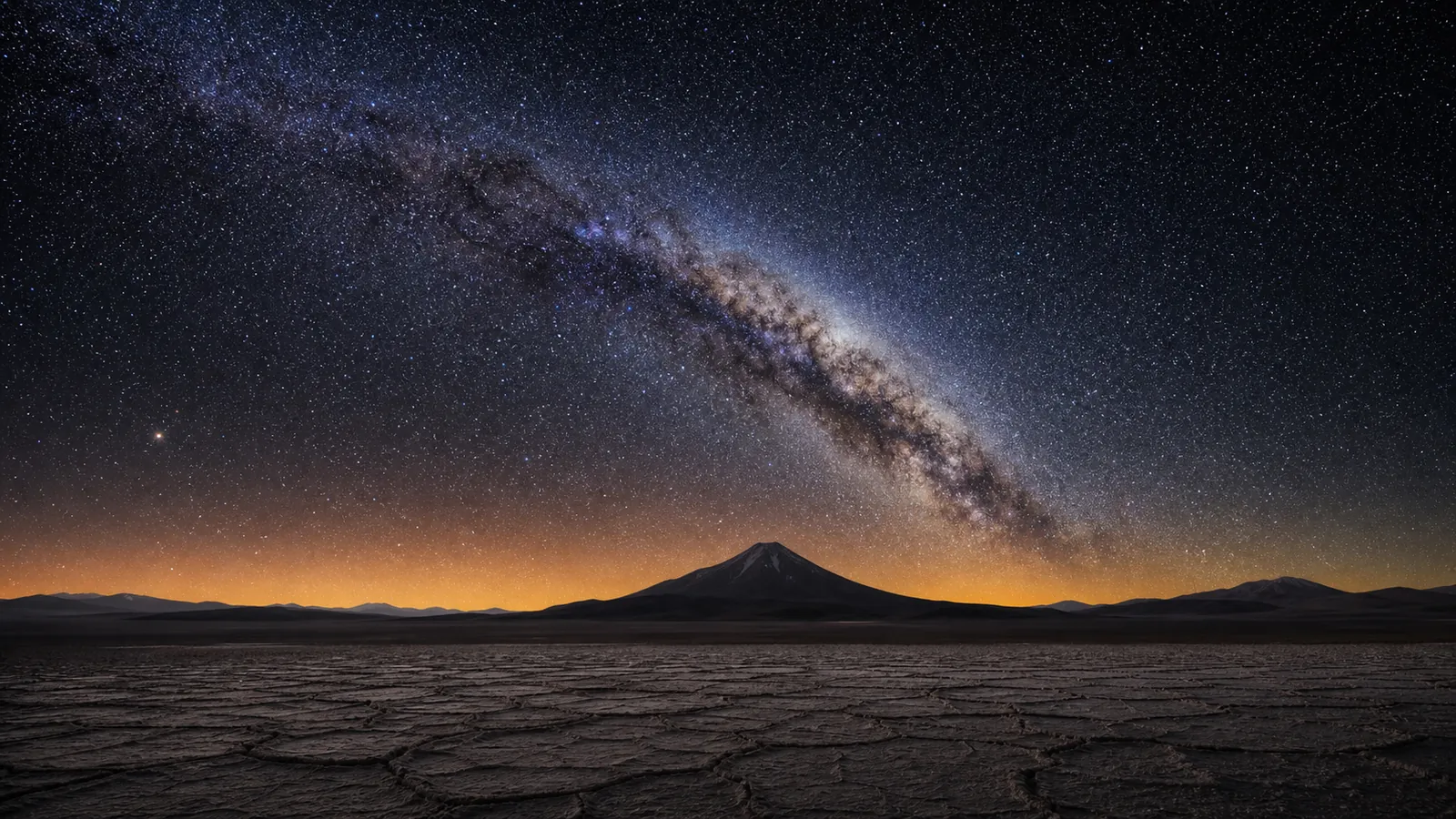
Timed to the moon
Every departure is scheduled inside a new-moon window, cross-checked against thirty years of cloud-cover climatology. We don't hope for dark skies. We calculate them.
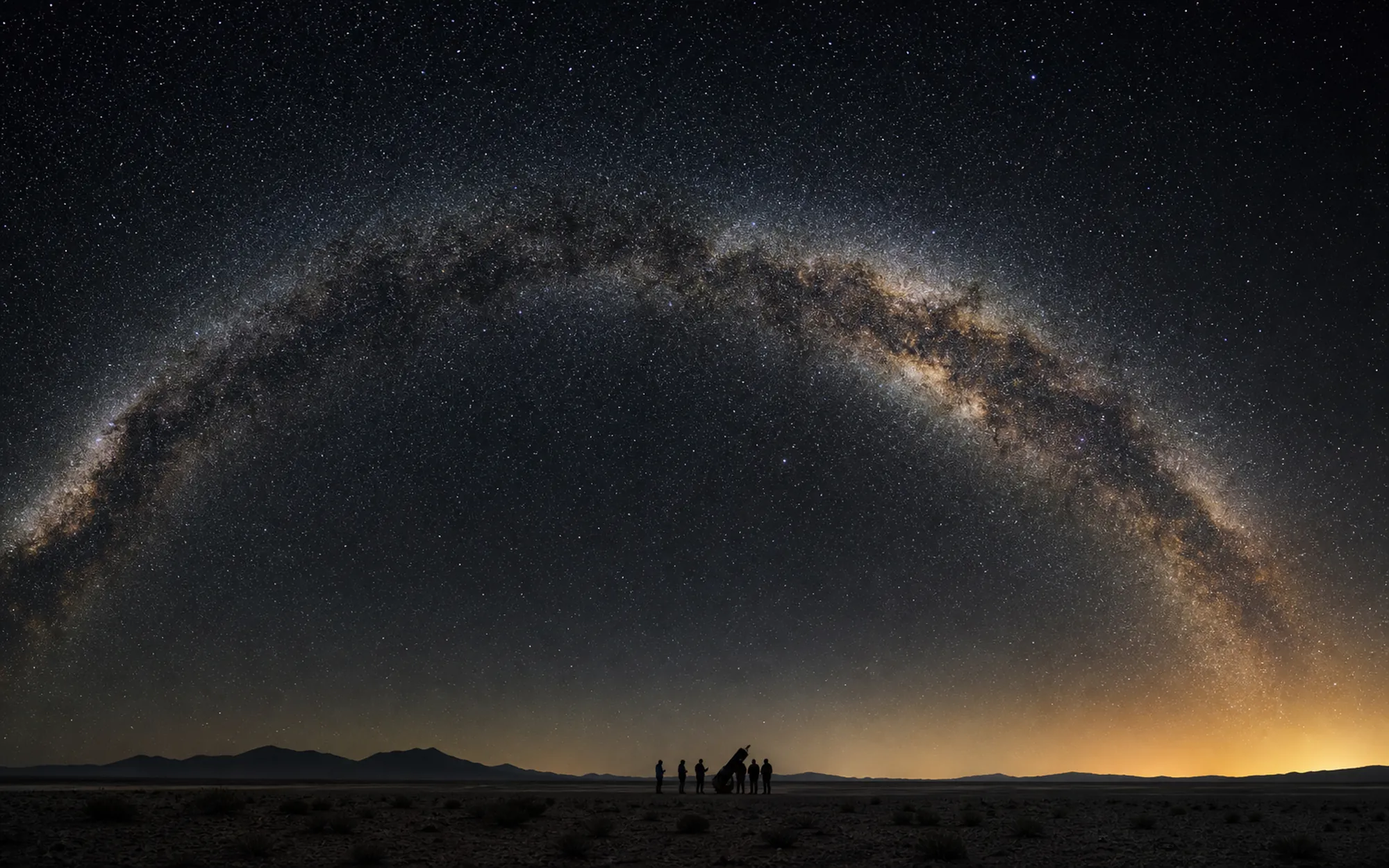
Aphelion leads small expeditions to the last Bortle-1 skies on Earth — places dark enough that the Milky Way casts a shadow and the airglow itself becomes visible. Astronomer guides. Eight travelers, never more.
The premise
For two hundred thousand years, every human who ever lived slept under the whole sky. In the last hundred, we traded it for streetlight. Aphelion exists for one reason — to take you somewhere the trade never happened.
The Bortle scale
Astronomers grade night skies from 9 — inner city — down to 1, a sky so dark your eyes take forty minutes to fully open to it. Fewer than a dozen accessible places on Earth still qualify. We operate in four of them.
Drag the scale. This is roughly what each grade takes from you.
The method
Every departure is scheduled inside a new-moon window, cross-checked against thirty years of cloud-cover climatology. We don't hope for dark skies. We calculate them.
Every expedition is led by a working or research-trained astronomer alongside a certified wilderness guide. The person pointing at the sky can also tell you what it is, and why it matters.
Dark adaptation is fragile — one phone screen resets everyone's eyes for half an hour. Small groups aren't a luxury position; they're an optical requirement.
20-inch Dobsonians, tracked astrophotography rigs, image-stabilized binoculars, and reclined zero-gravity chairs travel with us. You bring warm layers and curiosity.
“I’m fifty-eight years old and I had never — not once — seen my own galaxy. On the third night in the Atacama I finally understood what every human before my grandmother’s generation simply knew.”
Sarah K. — Atacama Deep Field, April 2025